What are the differences between skin texture treatments at Gangnam Station: Rejuran, Juvelook, and LDM? A comprehensive summary
2026-07-27
The deterioration of skin texture is caused by 'decreased density' and 'barrier damage'.
Home care alone has its limits, and it is essential to choose a treatment that suits your skin condition among Juvelook (filling), Rejuran (regeneration), and LDM (hydration and pain-free) for effective skin texture management.
By properly managing hydration, UV protection, and heat sensation for 7 days after the treatment, you can enhance the completion of your skin texture.
Hello, this is Derna Clinic.
Stop saying you didn't sleep well.
Why does my reflection in the morning mirror look like this when I clearly went to bed at 10 PM? I haven't gained weight, and I don't have deep wrinkles, yet my face looks oddly dull and tired. Even after putting in effort with makeup, it doesn't go on smoothly like it used to, and by lunchtime, my foundation is already settling into my skin.
This may not be due to a lack of sleep but rather a signal that your skin texture is becoming disrupted. When the texture becomes rough, the angles at which light reflects vary, making the overall complexion appear darker. This is why even applying expensive moisturizers and changing foundations or cushions only provides temporary relief. It's time to refine the 'base' rather than just 'covering' it up.
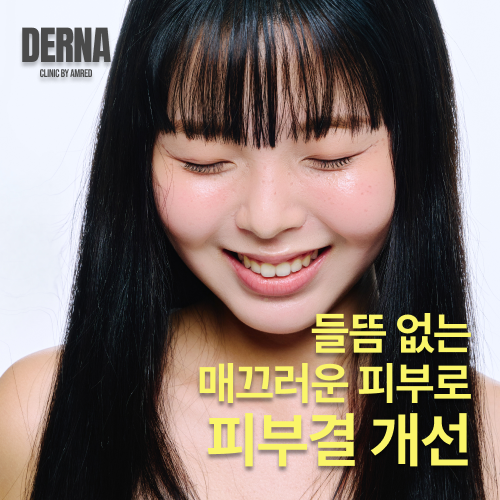
Derna Clinic starts by accurately identifying the subtle sources of stress you feel every morning when you look in the mirror.
Why do gaps in texture occur that home care can't solve?
Even if you try masks and scrubs, the reason they only work temporarily is due to issues with the skin's 'density' and 'barrier'. As we age, the collagen support structure loosens, and the ability to retain moisture weakens. During this process, the skin surface may slightly sink or become rough, leading to gaps in texture. Simply applying moisture to the surface cannot resolve this deep concern.
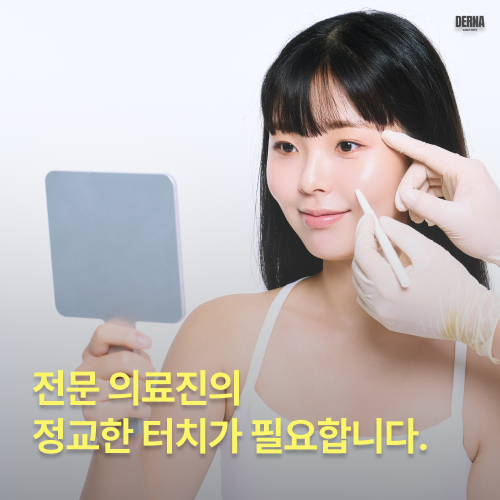
It is necessary to create an environment where the skin can regenerate itself or to provide precise touch that directly fills in the lacking density.
Three solutions that determine your texture: Fill, regenerate, and awaken
The reasons for rough texture vary from person to person. Whether it's due to being hollow and flaky, a weakened barrier making the skin sensitive and rough, or simply dryness causing the texture to stand out, we do not insist on just one treatment but bring out three options tailored to your skin condition.
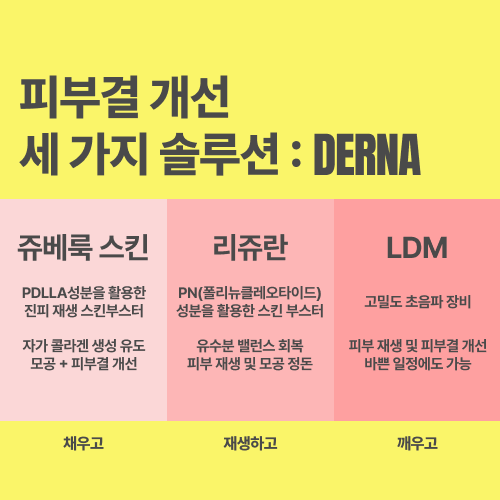
💛[Filling densely from within] Juvelook Skin
When the density inside the skin decreases, the surface becomes uneven, and pores stretch vertically. Juvelook Skin helps to induce self-collagen production, tightening the loosened skin and pores from within. Over time, a firm strength emerges from within, allowing you to achieve a healthy skin texture with smooth light flow.
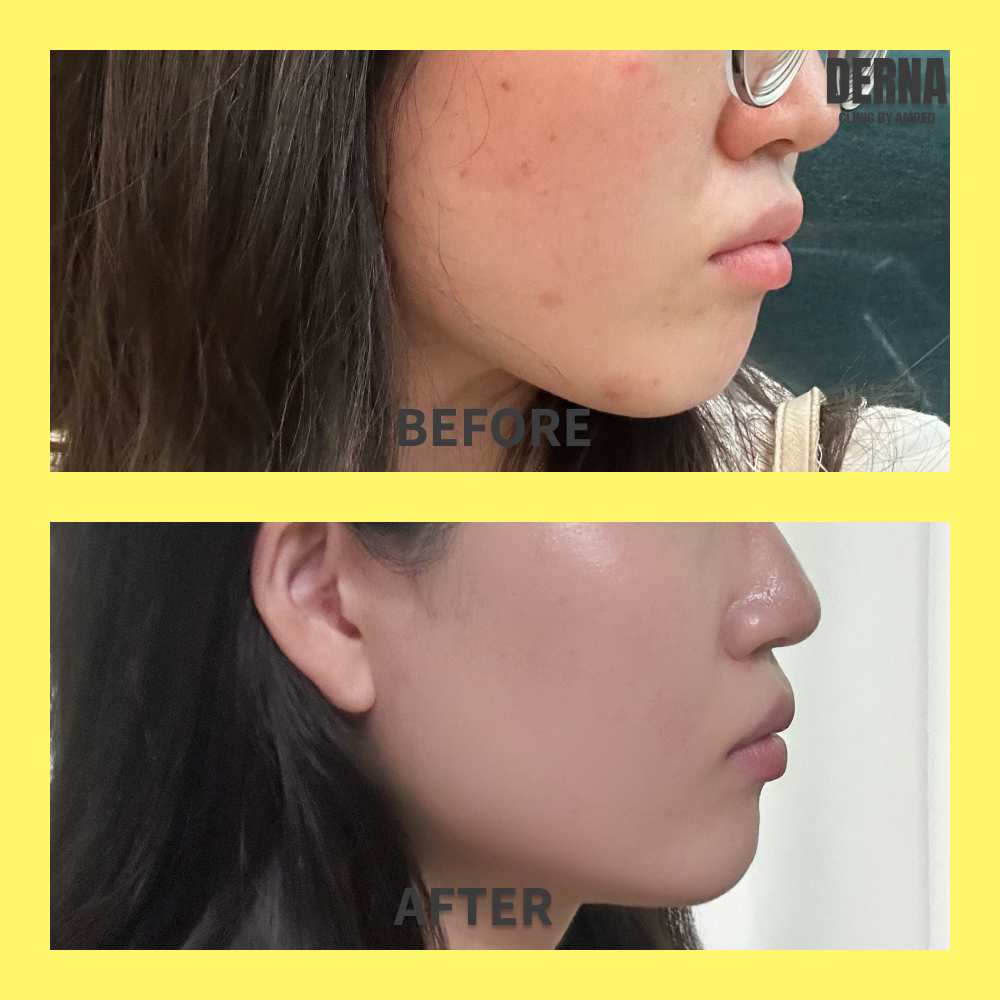
💛[Reviving a tired barrier] Rejuran
If your skin is thin and sensitive to stimuli, and the texture has become rough, regeneration is the priority. By directly injecting PN into the dermis to restore the damaged skin structure, it helps to balance the disrupted oil and moisture levels and refine enlarged pores. You can expect a subtle glow that rises from within, rather than just a shiny surface.
💛[Awakening moisture tension] LDM
This is a good option for those who are concerned about pain or recovery time. Using high-density ultrasound, it draws moisture particles to the skin surface, making the skin feel softer than it does immediately after treatment. It is recommended for those with dry skin, which leads to prominent pores and texture issues, as well as those with important events the next day.
The golden time for 'texture' completion after treatment: 7 days
No matter how good the treatment is, if post-care is poor, satisfaction can decrease. Especially for texture improvement treatments, it is like planting seeds in the skin, so creating an environment for them to grow is key.
🟡Hydration should be abundant
After Juvelook or Rejuran, the skin uses more moisture than usual for regeneration. Drinking plenty of water and applying a generous amount of moisturizer will keep the texture from cracking and help it feel plump.
🟡Caution with heat, prioritize soothing
Avoid activities that raise the temperature of your face, such as saunas, drinking alcohol, or intense exercise for a few days after treatment. Please maintain a 'rest' mode until the skin calms down.
🟡Sunscreen is a fundamental necessity
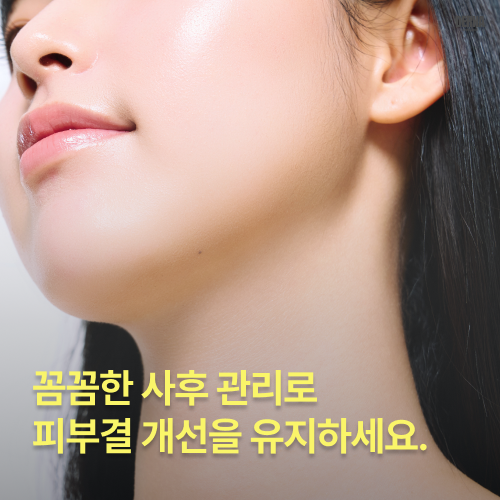
During the process of new skin growth, UV rays can be detrimental. To prevent the carefully refined texture from being marred by pigmentation, do not forget to apply sunscreen when going outside.
Frequently Asked Questions
Q. For skin texture treatments at Gangnam Station, what should I look into first since it's my first time?
Skin texture concerns vary in cause, so treatments are not limited to just one option. Depending on whether the texture is uneven due to low density, sensitive and rough due to a weakened barrier, or simply prominent due to dryness, the direction may differ among Juvelook, Rejuran, and LDM. If you consult near Gangnam Station, the first step is to receive guidance on the treatment that suits your skin type after a skin diagnosis.
Q. What exactly are the differences between Rejuran, Juvelook, and LDM?
All three treatments aim to improve skin texture, but they work differently. Juvelook is known to help fill the skin's internal density by inducing self-collagen production, while Rejuran is a regenerative treatment that injects PN into the dermis to help restore the damaged barrier and balance oil and moisture levels. LDM is a non-invasive method that uses high-density ultrasound to draw moisture to the skin surface. The choice may vary depending on the level of concern regarding pain and recovery time, as well as whether density, regeneration, or hydration is the priority.
Q. Are there any side effects from skin texture improvement treatments?
Treatments like Juvelook and Rejuran, which are administered via injection, may cause temporary swelling, bruising, redness, and slight textural changes (embossing) at the treatment site for a few days. These are mostly normal reactions during the recovery process and often subside over time, but individual skin conditions, treatment areas, and the practitioner's skill level can affect the outcome. LDM is known to be relatively less stimulating due to its non-invasive nature. If swelling or pain persists or is severe, it is safest to contact the clinic where you received the treatment.
Q. What are the typical prices for Rejuran and Juvelook?
Prices vary depending on the treatment area, dosage (cc), number of treatments, and the clinic, making it difficult to provide a uniform answer. It is advisable to consult and confirm the exact estimate based on the dosage and frequency that match your skin condition and goals. If you are curious about the costs of Rejuran, Juvelook, and LDM at Derna Clinic, please check the event below.
🔎Check the Rejuran, Juvelook, and LDM event
※The event is subject to change or termination without notice as of the date of writing.
Q. Many treatment reviews say the effects are good, is that really true?
Treatment reviews can be useful as reference material, but results can vary based on individual skin type, treatment area, number of treatments, and post-care. Especially for texture improvement treatments, it is often reported that noticeable changes are felt gradually through repeated treatments and consistent care rather than dramatic changes from a single treatment. When reading reviews, it is recommended to check if the cases have 'similar skin concerns' to yours.
Q. How long is the downtime (recovery period) after treatment?
Injection treatments like Rejuran and Juvelook may leave slight swelling, embossing, or bruising for a few days after treatment, so it is advisable to consider a recovery period of at least 2-3 days, and up to a week. LDM does not use needles, so it generally has less downtime, and many can resume daily activities or makeup immediately after treatment. However, since individual differences may exist, if you plan to have treatment before an important event, it is safe to share your schedule during the consultation.
Q. How many sessions are needed to feel the effects? What is the treatment interval?
Texture improvement treatments typically show cumulative changes when repeated several times at intervals of 3-4 weeks. Rather than expecting immediate changes from a single treatment, the results build up when conducted in a series according to the skin regeneration cycle. The exact number of sessions and intervals may vary based on skin condition, so it is advisable to receive a personalized plan during the consultation.
Q. I heard LDM is painless, is anesthesia not needed?
LDM is a non-invasive treatment using high-density ultrasound rather than injections, so it is known to have less pain compared to injection treatments like Rejuran and Juvelook. For this reason, it can often be performed without anesthesia cream or completed in a short time, making it a popular choice for those concerned about pain or recovery time. However, sensitivity may vary by individual.
Q. Can enlarged pores be improved with this treatment?
Enlarged or prominent pores are often related to decreased density or sagging of the skin, so treatments like Juvelook that induce collagen production or Rejuran that restores barrier and elasticity can also help with pore management. However, the appropriate approach may differ depending on the cause of pore enlargement (sebum, loss of elasticity, aging, etc.), so accurate diagnosis of the cause is a priority.
Q. Are there any precautions to follow before and after treatment?
Before treatment, it is advisable to avoid alcohol, excessive exercise, and the use of strong irritating cosmetics, and after treatment, adequate hydration, moisturizing, and sunscreen use are particularly important. Avoid activities that raise facial temperature, such as saunas, drinking alcohol, or intense exercise for a few days until the skin calms down. Detailed precautions may vary depending on the type of treatment and individual skin condition, so it is recommended to follow the care instructions provided by the clinic after treatment.
Derna Clinic determines the direction of treatment based on skin type diagnostic data instead of vague statements like "it will just get better."
By accurately identifying which areas of my skin are most dehydrated, we can create a customized treatment plan that meets the necessary needs. Focusing solely on the data-driven answers without excessive persuasion, and providing a private space where you can concentrate solely on yourself without the hassle of movement.
We hope you experience the smoothest skin tension you've been longing for with Derna Clinic's precise touch and meticulous post-care guidance.
10AM - 10PM EVERYDAY
SKIN. LOVE. LIFE
DERNA