How to Choose a Laser for Pigmentation?
2026-08-04
Pigmentation lasers are treatments that manage melasma, spots, and dark spots caused by excessive melanin production.
Since the depth and nature of pigments vary, it is important to design a customized combination of PicoSure, Brightone2, and Reepot after a precise diagnosis.
Pigmentation has a high recurrence rate, so consistent care such as moisturizing and UV protection is necessary after treatment.

Hello, this is Derna Clinic.
There are days when you spend an unusually long time on your base makeup every morning. Even if your condition is not bad, trying to cover up the dark traces can make your makeup look thick and heavy. If no matter how much you layer it on, by the afternoon it mixes with darkening and makes your complexion look duller, it’s not just a matter of makeup skills.
Spots scattered all over your skin. In other words, the moment has come when you need to manage pigmentation. It’s not about covering up; it’s about restoring the skin’s natural transparency. We propose Derna Clinic's Whitening Pigmentation Solution that creates positive changes without disrupting your busy daily life.
Why Do Melasma, Spots, and Dark Spots Occur? Understanding the Causes of Pigmentation
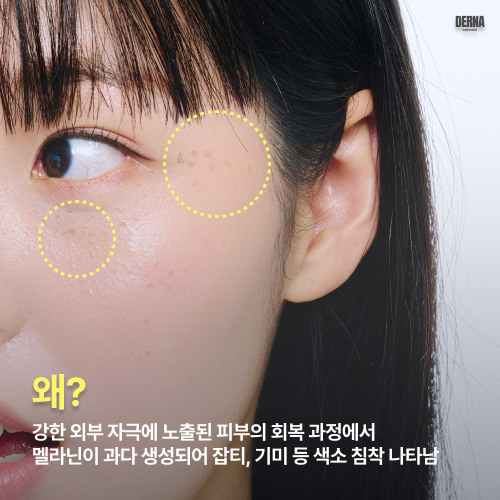
Our skin activates a defense mechanism called 'melanin' to protect itself from UV rays, external stimuli, and hormonal changes. However, excessive UV exposure or the recovery process after inflammation can lead to excessive melanin production, which accumulates in the skin and leaves stains on the surface.
This is the main cause of pigmentation, commonly referred to as melasma, spots, freckles, and dark spots.
How Should You Choose a Melasma Laser or Pigmentation Laser?
Each pigment has a different background and depth of establishment. Some are lightly scattered on the surface, while others are deeply embedded in the dermis. Therefore, managing pigmentation starts with the medical staff's understanding of the pigment's properties and applying them accurately, rather than just relying on the equipment's performance. At Derna Clinic, we first confirm your pigment's depth and distribution through AI-based precise 3D device data.
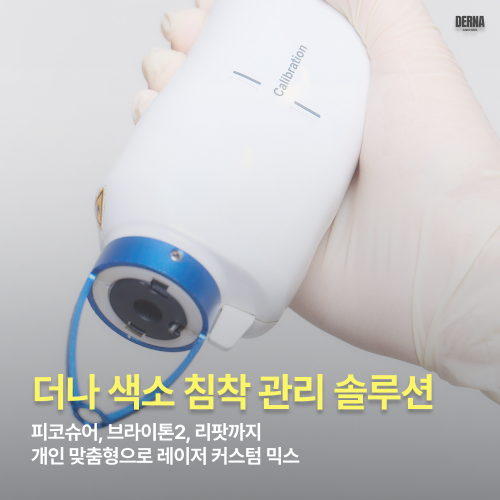
Through evidence-based design rather than intuition, we customize the laser that you truly need and proceed with systematic pigmentation management.
💛PicoSure
PicoSure is one of the lasers for melasma and pigmentation that delivers energy in ultra-short pulses, breaking down pigment particles into fine powder form, helping our body naturally lighten the pigment.
💛Brightone2
Brightone2 not only targets specific spots of pigment but also improves overall skin tone and provides whitening effects, similar to a spot laser.
💛Reepot
Reepot is a solution for deep pigmentation and dark spots that are difficult to improve with simple treatments. It focuses on the problem areas while protecting normal skin with a powerful cooling system and precise targeting technology.
Reasons to Combine Rejuran After Melasma Laser Treatment
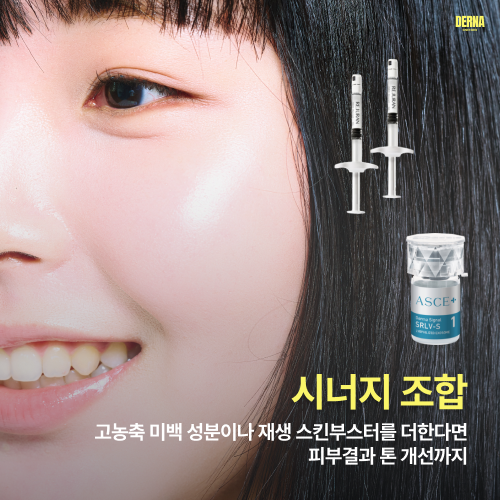
If the laser breaks down and removes unnecessary pigments, you can also consider the step of filling that void with healthy energy. The area where the laser energy has passed creates a favorable environment for absorbing active ingredients. If you add concentrated whitening ingredients or regenerative skin boosters according to your skin condition at this time, you can expect a synergy that not only removes spots but also brightens the complexion itself.
In particular, skin boosters like Rejuran or Exosome play a supportive role in helping the stimulated skin barrier create an environment for collagen regeneration after melasma laser treatment. This process prevents the phenomenon of pigmentation darkening again after pigmentation management and creates a healthy skin foundation that allows the skin to maintain a clear tone.
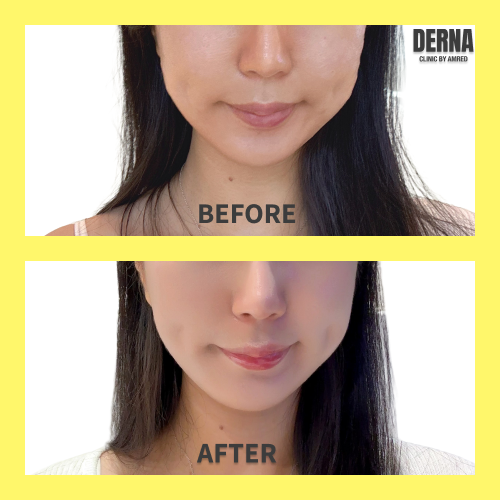
Taking a step beyond just erasing visible traces, Derna Clinic considers the best combination that allows the transparent glow rising from within to stay a little longer, so your skin can shine the brightest.
Post-Melasma Laser Care: How to Reduce Pigmentation Recurrence
Just because you received a melasma laser treatment doesn’t mean the pigmentation will disappear permanently. Unfortunately, pigmentation disorders tend to have a high recurrence rate. Even if the visible pigment is removed, the melanin factories deep within the skin are always ready to start up again. Therefore, the key to sustained pigmentation management lies in meticulous maintenance after the treatment.
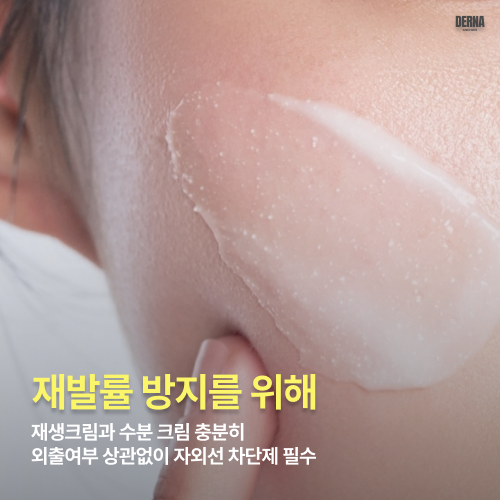
No matter how thorough the treatment is, if the final aftercare is neglected, it is difficult to fully enjoy its benefits. After laser treatment, the skin is much more sensitive and requires more moisture than usual due to cell regeneration. It is important to apply regenerative cream and moisturizing cream sufficiently for a week after the treatment to prevent the skin from drying out. Sufficient hydration promotes skin metabolism, aids in the recovery process, and creates an environment conducive to gradually lightening the pigment.
Especially important in post-melasma laser care is UV protection. Careful management is needed to ensure that the newly formed delicate skin cells do not produce melanin again, regardless of whether you go outside.
Frequently Asked Questions
Q. Why do prices for pigmentation lasers vary from clinic to clinic?
The depth and distribution of pigments differ by type, so the required laser combinations and number of treatments vary between lightly spread spots/freckles and deeply embedded dark spots. Therefore, costs tend to vary based on how the pigments are diagnosed and how the lasers are combined rather than just the performance of a single piece of equipment. The exact cost can be confirmed after a consultation following a diagnosis of your pigment condition. Derna Clinic is currently running events related to melasma lasers, so if you are curious about the prices, please check the page below.
🔎Go to check the pigmentation laser event
※Events may change or end without notice. If you cannot find the information you are looking for, please inquire for detailed guidance.
Q. What criteria should I use to choose a pigmentation laser?
Managing pigmentation is more about accurately understanding the properties of the pigment and designing accordingly than about the superior performance of the equipment. It is common to first confirm the pigment's depth and distribution numerically with a precise 3D device, and then approach with a custom combination of necessary lasers. Therefore, rather than focusing on specific equipment names, the selection criteria can be whether the clinic provides a precise diagnosis of your pigment condition.
Q. How many sessions of pigmentation laser treatment are needed to see results?
Pigmentation lasers are typically performed in multiple sessions with lower energy rather than removing everything in one go with high energy. While the number of sessions may vary depending on the depth and distribution of the pigment, it is common to see gradual lightening of the pigment as the sessions accumulate. The exact number of required sessions is designed individually based on diagnostic results.
Q. What is the difference between Pico laser and toning laser?
Traditional laser toning delivers energy in nanoseconds, while Pico laser delivers energy in picoseconds, which is about 1000 times faster. Because of the faster delivery speed, it can break down pigment particles more finely and reduce damage to surrounding tissues, making it relatively advantageous for stubborn pigmentation. However, which method is more suitable can depend on the depth and type of the pigment.
Q. Are melasma, spots, and dark spots treated with the same laser?
Each pigment has a different background and depth of establishment. Some are lightly scattered on the surface, while others are deeply embedded in the dermis. Therefore, rather than treating them uniformly with one piece of equipment, it may be more effective to customize the approach based on the properties of the pigment, combining PicoSure (to finely crush pigment particles), Brightone2 (for local pigment and overall tone improvement), and Reepot (for deep pigment and dark spot targeting).
Q. What are the benefits of receiving Rejuran after pigmentation laser treatment?
The area where the pigment has been broken down and removed by the laser becomes a favorable environment for absorbing active ingredients, and adding a regenerative skin booster like Rejuran at this time can help the stimulated skin barrier create an environment for collagen regeneration. This can lead to a synergy that not only removes the pigment but also prevents it from darkening again and brightens the complexion itself.
Q. Can scabs form or pigmentation become darker after pigmentation laser treatment?
If a pigmentation laser is attempted to be removed with strong energy all at once, it can stimulate the melanocyte, causing the pigment to temporarily darken (post-inflammatory hyperpigmentation, PIH) or scabs to form. Therefore, it is a principle to proceed with lower energy over multiple sessions. Thorough post-treatment hydration and UV protection are also important in reducing these reactions.
Q. When can I wash my face and apply makeup after pigmentation laser treatment?
Most people can wash their face and apply light makeup on the same day, but immediately after the laser, the skin is more sensitive and requires more moisture than usual, so it is important to manage it gently without irritation.
Q. Why does pigmentation reappear even after receiving laser treatment?
Even if visible pigments are removed with melasma laser treatment, the cells that produce melanin deep within the skin are always ready to become active again. Therefore, it is important to reduce the possibility of recurrence through consistent care such as hydration and UV protection after treatment.
Q. Who is more likely to benefit from pigmentation laser treatment?
Surface-level spots or freckles tend to respond relatively well to lasers, while stubborn dark spots embedded deep in the dermis may require multiple sessions and precise equipment combinations. Therefore, it is necessary to receive a precise diagnosis of your pigment's depth and distribution and approach it with a customized design.
The Time to Regain Your Most Natural Transparency
We know well the vitality that comes from the dramatic change when a cumbersome morning of carefully concealing with concealer transforms into a light daily routine with just sunscreen. Derna Clinic does not simply list trendy equipment but offers honest considerations about your skin texture and pigment depth, along with safe and efficient designs.
Let’s not hide behind thick makeup; until the day when transparent light returns to your face with just a light layer of sunscreen, Derna Clinic will be with you.
10AM - 10PM EVERYDAY
SKIN. LOVE. LIFE
DERNA